LangGraph is the agent orchestration framework from the LangChain team, built around a fundamentally different idea than its predecessor: instead of chaining LLM calls sequentially, you define agents as stateful directed graphs. Nodes execute functions, edges route between them based on conditions, and a persistent state object flows through the entire execution. For developers who have outgrown simple prompt-response patterns and need agents that loop, branch, and maintain context across complex workflows, LangGraph represents a deliberate architectural choice.
If you are searching for a LangGraph review, you likely fall into one of a few camps. You may have built agents with LangChain and hit the ceiling of what linear chains can do. You may be evaluating orchestration frameworks for a production system that requires human-in-the-loop approval, multi-agent coordination, or reliable state persistence. Or you may be trying to decide whether LangGraph's graph-based paradigm justifies the learning curve over simpler alternatives. This review covers what LangGraph does well, where the architecture shines, and where it creates friction that matters in production.
One distinction worth making immediately: LangChain and LangGraph solve different problems. LangChain organizes LLM calls into sequential or branching chains with a focus on retrieval-augmented generation and tool use. LangGraph treats agent execution as a graph computation problem, where cycles are first-class citizens, state is explicitly managed, and the execution path can be interrupted, resumed, and inspected at any checkpoint. You can use LangGraph without LangChain, though the two share some foundational abstractions like message types and model interfaces.
What LangGraph Actually Does
At its core, LangGraph provides a framework for building stateful, multi-actor applications using directed graphs. Each graph consists of three primitives: nodes (Python or JavaScript functions that transform state), edges (routing logic that determines which node executes next), and state (a typed data structure that accumulates information as the graph executes). The graph compiler validates the structure, resolves execution order, and produces a runnable application.
This architecture makes certain patterns natural that are awkward in chain-based frameworks. An agent that needs to call tools, evaluate results, and decide whether to call more tools or respond to the user is a cycle in a graph. A workflow that requires manager approval before executing a database write is a conditional edge with an interrupt. A system with multiple specialized agents coordinating on a shared task is a set of sub-graphs communicating through a parent state. These are the use cases LangGraph was designed for, and the graph abstraction handles them without the workarounds that chain-based systems require.
Core Concepts in Practice
The state object is central to everything in LangGraph. You define it as a TypedDict or Pydantic model in Python, specifying every field the graph can read or write. Nodes receive the current state and return partial updates that get merged back. This explicit state management eliminates an entire category of bugs where agents lose context between steps or accumulate stale information. The trade-off is verbosity: you must declare your state schema upfront and think carefully about what each node needs to read and write.
Edges in LangGraph can be static (always route from node A to node B) or conditional (evaluate a function against the current state to determine the next node). Conditional edges are where the graph-based approach pays off most clearly. Instead of nested if-else blocks buried inside a chain, routing logic lives in dedicated functions that are visible in the graph structure, testable in isolation, and logged by the checkpointing system. For complex agents with many decision points, this separation of concerns matters.
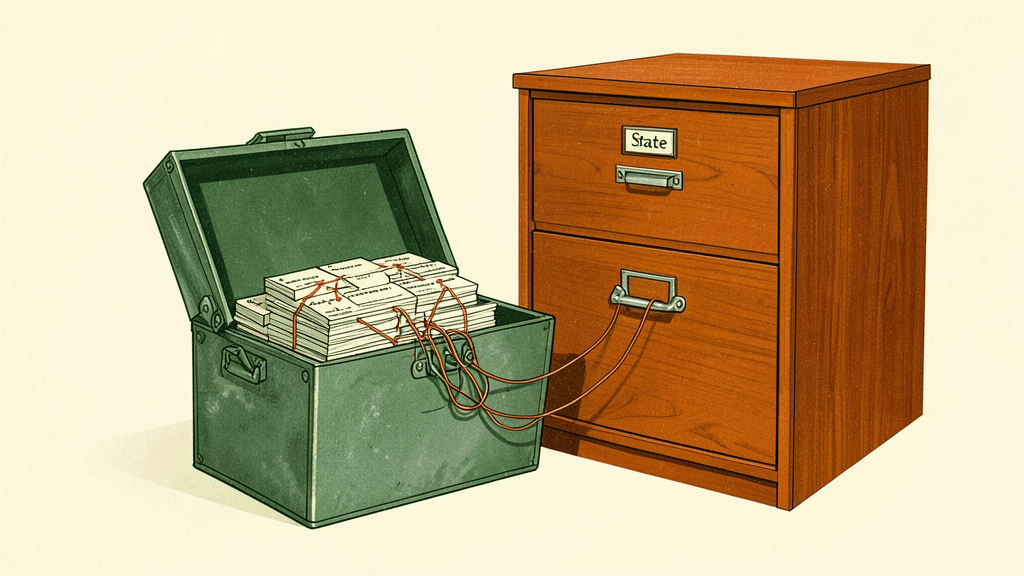
Checkpointing is LangGraph's persistence mechanism. At each step, the framework serializes the complete graph state to a configurable backend. The built-in options are an in-memory saver for development and testing, SQLite for single-node deployments, and PostgreSQL via asyncpg for production systems. Checkpointing enables three capabilities that are difficult to implement from scratch: conversation persistence across sessions, time-travel debugging where you can rewind a graph to any previous state, and human-in-the-loop patterns where the graph pauses at a designated node and resumes when a human provides input.
Architecture and Infrastructure
The graph compiler is LangGraph's build step. It takes your node and edge definitions, validates that the graph is well-formed (no orphaned nodes, valid routing targets, consistent state types), and produces a compiled graph object that you invoke with an initial state. Compilation catches structural errors before runtime, which is valuable for complex graphs where a typo in an edge target would otherwise surface as a confusing runtime exception.
Streaming support in LangGraph operates at multiple levels. You can stream individual LLM token outputs, node-level state updates, or custom events emitted from within nodes. For applications that need to show users partial results as agents work, or for dashboards monitoring long-running agent workflows, this granularity is useful. The streaming API integrates with both synchronous and async Python, and the JS/TS library has equivalent support.
Sub-graphs allow you to compose smaller graphs into larger systems. A common pattern is a supervisor graph that routes tasks to specialized sub-graphs, each with their own state schema and execution logic. Sub-graphs can communicate through the parent state, and their internal checkpoints are nested within the parent graph's checkpoint tree. This composability is one of LangGraph's strongest architectural features for teams building multi-agent systems.
LangGraph Platform and Cloud
LangGraph Platform is the managed deployment layer for LangGraph applications. It provides hosted infrastructure for running graphs as API endpoints, with built-in scaling, cron-based scheduling, and integration with LangSmith for tracing and monitoring. The platform handles deployment packaging, environment management, and provides a studio UI for visualizing and debugging running graphs.
LangSmith integration is deep throughout the LangGraph ecosystem. Every node execution, edge evaluation, and state transition is automatically traced when LangSmith is configured. For production debugging, this observability is significant. You can inspect exactly what state each node received, what it returned, which edge was selected, and how long each step took. The combination of structural graph visualization and runtime trace data makes LangSmith one of the more capable agent debugging tools available.
Pricing
The core LangGraph library is open-source under the MIT license, free for any use. The cost conversation starts with the surrounding ecosystem. LangSmith, the observability platform, offers a free Developer tier with 5,000 traces per month, a Plus tier at $39 per seat per month with 10,000 included traces and additional traces at usage-based rates, and an Enterprise tier with custom pricing for higher volumes, SSO, and dedicated support. LangGraph Platform for managed cloud deployment is priced separately based on compute usage and is primarily aimed at teams that want to avoid managing their own infrastructure. Self-hosting LangGraph with open-source persistence backends incurs zero licensing cost beyond your own infrastructure.
Capability Overview
| Capability | LangGraph Support | Notes |
|---|---|---|
| Graph-based orchestration | Core feature | Directed graphs with cycles, conditionals, parallel branches |
| State management | Built-in | TypedDict or Pydantic models with automatic merging |
| Checkpointing / persistence | Built-in | In-memory, SQLite, PostgreSQL backends |
| Human-in-the-loop | Built-in | Interrupt nodes with configurable resume logic |
| Time-travel debugging | Built-in | Rewind to any checkpoint, replay from modified state |
| Streaming | Multi-level | Token, node, and custom event streaming |
| Sub-graphs | Built-in | Nested graphs with independent state schemas |
| Parallel execution | Supported | Fan-out nodes for concurrent branch execution |
| Multi-language | Python + JS/TS | Python is more feature-complete |
| Model agnostic | Yes | Any LLM provider at the node level |
| Observability | Via LangSmith | Free tier available; deeper features are paid |
| Managed deployment | LangGraph Platform | Separate paid product for cloud hosting |
| Open-source license | MIT | Core library only; tooling has separate licensing |
Key Features Worth Examining
Human-in-the-loop is one of LangGraph's most production-relevant features. You designate interrupt points in your graph where execution pauses and waits for external input. The state is checkpointed, the graph returns a pending status, and when a human provides approval or modified input, execution resumes from exactly where it stopped. For workflows involving financial transactions, content publication, or any action with real-world consequences, this pattern is essential. LangGraph implements it as a first-class concept rather than a bolt-on, which means the checkpointing and state management handle the complexity of suspension and resumption.
Time-travel debugging lets you rewind a graph's execution to any previous checkpoint and either inspect the state at that point or replay execution from a modified state. In practice, this is most useful during development when you need to understand why an agent took an unexpected path. Instead of re-running the entire graph from the beginning, you jump to the decision point, modify the state, and observe the different outcome. For complex multi-step agents, this saves significant debugging time.
Parallel execution through fan-out nodes allows multiple branches of a graph to execute concurrently. A research agent that needs to query three different APIs can fan out to three parallel nodes, each making its call independently, and fan back in to a node that synthesizes the results. The state management handles merging the parallel updates, though you need to define reducer functions for fields that multiple branches might write to simultaneously.
When LangGraph Falls Short
No framework review is complete without an honest look at where the tool creates problems. LangGraph has real limitations that affect specific teams and use cases.
1. The Learning Curve Is Genuinely Steep
LangGraph requires you to think in graphs. If your team has been building with sequential chains, REST APIs, or traditional application architectures, the mental model shift is significant. You need to understand state schemas, conditional edges, reducer functions for parallel state merging, checkpoint serialization, and the graph compilation process before you can build anything non-trivial. The documentation has improved substantially, but the conceptual overhead remains higher than most competing frameworks. Teams should budget real ramp-up time, not a weekend.
2. Over-Engineering for Simple Tasks
If your agent is a single LLM call with tool use and a system prompt, LangGraph adds complexity without proportional benefit. The graph abstraction pays for itself when you have cycles, conditional routing, human-in-the-loop requirements, or multi-agent coordination. For a chatbot that retrieves documents and answers questions, simpler frameworks or even direct API calls with a retry loop will get you to production faster with less code to maintain. The temptation to use LangGraph because it is the newer, more sophisticated tool from the LangChain team leads to unnecessary architectural complexity in straightforward applications.
3. LangChain Dependency Baggage
While LangGraph can technically be used without LangChain, the practical reality is messier. Many LangGraph examples and patterns assume LangChain message types, model interfaces, and tool definitions. The langgraph package pulls in langchain-core as a dependency. If you have had friction with LangChain's abstraction layers, frequent API changes, or dependency weight, some of that carries over to LangGraph. The team has worked to minimize this coupling, but it has not been fully eliminated. Teams that specifically chose to avoid LangChain may find this dependency uncomfortable.
4. Debugging Complex Graphs Without LangSmith
LangGraph's graph structure is inherently harder to debug than linear code. When a ten-node graph with conditional edges produces an unexpected result, tracing the execution path through print statements or basic logging is tedious. LangSmith makes this manageable with visual traces and state inspection, but LangSmith is a paid product beyond the free tier. If you are running high-volume production agents, the 5,000 free monthly traces will not last long. This creates a soft dependency on paid tooling for effective debugging, which is worth factoring into your cost analysis.
5. Ecosystem Lock-In Dynamics
LangGraph's open-source license is genuinely permissive, but the surrounding ecosystem creates gravitational pull toward LangChain's commercial products. LangSmith for observability, LangGraph Platform for deployment, LangServe for API hosting. Each is optional individually, but the integrated experience is meaningfully better than the a-la-carte alternative. Teams that start with the free tier and grow into production often find themselves evaluating LangSmith Plus or Enterprise not because the core framework requires it, but because the debugging and monitoring experience without it is notably worse. This is a legitimate business model, but it is also a form of ecosystem lock-in that developers should evaluate with open eyes.
The Bottom Line
LangGraph is a serious framework for a specific class of problems. If you are building agents that require stateful execution with cycles, multi-step workflows with human approval gates, or multi-agent systems that need coordinated state management, LangGraph's graph-based architecture provides genuine structural advantages over chain-based or ad-hoc alternatives. The checkpointing system, human-in-the-loop primitives, and sub-graph composition are production-grade features that would take significant effort to build from scratch.
The framework is best suited for teams that have already built simpler agents and hit concrete limitations around state management, execution control, or debugging. If you are starting from scratch and your use case is straightforward, consider whether a lighter-weight approach gets you to production faster. The graph abstraction is powerful but not free in terms of learning curve and code complexity.
For teams that are also evaluating their LLM provider alongside their orchestration framework, Claude integrates cleanly with LangGraph at the node level, and development tools like Cursor can accelerate the graph definition process with AI-assisted code generation. The model-agnostic nature of LangGraph means your framework choice and your model choice remain independent decisions, which is how it should be.
Affiliate disclosure: Some links in this article are affiliate links. If you sign up through them, we may earn a commission at no extra cost to you. We only recommend tools we believe provide genuine value to developers building agent systems.
FAQ
New reviews, every week.
One email when we publish. No hype, no spam, unsubscribe anytime.
Related reads
More from WildRun Reviews
Part of the WildRun AI network.